
There is a specific kind of quiet that comes when something true has just been made.
Not the loud, backslapping energy of a club banger coming together, but something closer to reverence. The kind of stillness that makes everyone in the room exchange glances without saying a word. That is what happened late one night in a Lagos apartment, when a young artist named Fido laid his voice over a beat that producer Choke Boi had been carrying around for months, waiting for exactly this moment.
For months, Joy Is Coming did not exist to the world. It sat in a vault while other singles dropped and faded as the Nigerian music industry ran its usual spectacular course through the year. The team behind the record looked at it and the calendar and decided that would define the song's entire story: they would wait.
They were right to.
The man who heard it first
Before there was a song, before there was even a session, there was Caleb Oluwasegun Oyolola. He runs Inner Circle Entertainment. Caleb's entry into Fido's world came through a producer and mixing engineer named Iyke Elvis, with whom he had been working at Jonzing World. It was Iyke who first played him Awolowo, the record that would become Fido's debut statement. The reaction was instinctive. "I heard this track, and I was like, who is this?" Caleb recalls. "I want to find a way to connect with this guy." What he heard was not simply a good song but differentiation — an artist doing something that didn't fit the existing template, and doing it with an ease that suggested the difference wasn't affected. "It's a special record. When you play it to other people, and you see their reactions, you just know it can get anyone's attention."
The first meeting between Caleb and Fido happened at the Parktonian Hotel in Lagos. There were other people in the room, among them a man already claiming some form of ownership over Fido. Caleb sat, listened, said what he had to say about his plans, and let the conversation breathe. Something shifted in Fido. He began coming to Caleb privately, asking for advice, trying to understand whether the arrangement being offered by the other party was actually in his interest. Caleb was direct: "These people are doing it based on — we have money, we want to run a record label. Not really because they have plans to actually push him." The situation collapsed under its own weight, and Fido walked away. Six to seven months passed before he came back to Caleb and said he was ready to move.
The beat that didn't belong to anyone else
David Etop, who is best known as Choke Boi, grew up in Abuja as a church instrumentalist before finding his way to Ikorodu, Lagos, where he began making beats with the ear of someone trained not for the dancefloor but for the spirit. He treated each production with a protective, almost devotional care. The beat that would become "Joy Is Coming" had already lived a complicated life before Fido heard it.
Choke Boi had played it for a well-known "lover boy" artist, whose entire brand was built on romantic records. The artist never responded. "If I send something to you and you don't give me positive feedback, I feel like you don't want it," Choke Boi says. "I knew it didn't belong to him." So the beat waited.
The session
Caleb had been organising recording sessions for Fido with deliberate discipline. Fido was based in Ogun State at the time, travelling from Matogun in Ogun State to Lagos whenever sessions were booked, staying in an apartment the team arranged before returning home. It was during one of these extended stays that Joy Is Coming was made. Choke Boi walked in late, carrying a box of equipment, setting up while Fido was finishing other sessions. By the time they worked together, it was deep into the night.
What Caleb knew, and what Choke Boi did not, was that Fido had actually recorded a version of this song before on a different beat. The melody and emotional shape of what would become Joy Is Coming had already been living inside Fido. When the right beat arrived, it simply unlocked what was already there. "That's why when it came, it was quite easily done," Caleb says. Choke Boi's memory confirms the frictionless quality of the session. "He already had some parts in his head. He just came, and whatever he felt, he just did it. He didn't overthink it." The recording was made at a speed that made the session feel less like work and more like retrieval.
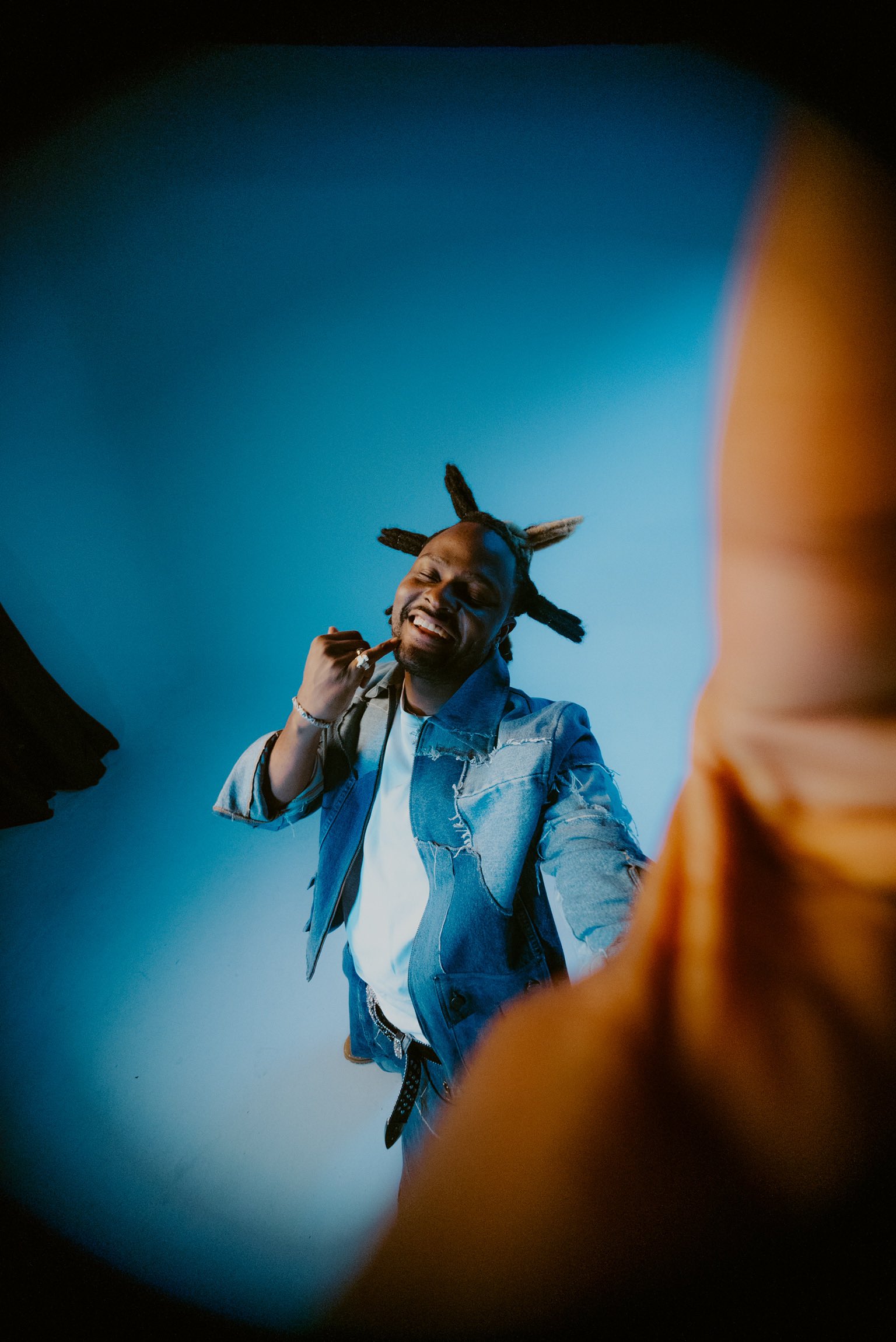
Even the imperfections became part of the record. A background whistle from the room made it into the final master. "We just had to leave it because the song was good," Choke Boi says.
But the detail that has never been told publicly belongs to Caleb. The title, those three words, "Joy Is Coming", did not come from Fido or Choke Boi. They came from Caleb, and from a phrase he had been carrying long before anyone walked into that room. Months earlier, during a drawn-out negotiation to get a separate artist signed, a prominent industry figure, Poco Lee, kept reassuring him with the same patient words: joy is coming, joy is coming. The phrase lodged itself in Caleb's mind. When Fido finished recording that night, and the song had everything except a name, Caleb heard the gap, suggested the phrase, and Fido made it his own. "That was how we did it," Caleb says.
The Bridge to CiDAR
After the session, Caleb thought carefully about who needed to be in the room next. He had known Olamide "Bimbogram" Abimbola for years, long enough to know not just his track record but his character, having worked with him at Azuri and Jonzing World. When Caleb thought about who should handle the next phase of Fido's development, Bimbogram was not a default choice; he was considered one. "There are some people who, when you speak in terms of ideas, you just know this person is on your frequency," Caleb says.
His broader philosophy on collaboration also set him apart from many in the industry. "Anything to win," he says. "If I need to give everybody a share and we all win, let's go." He and Bimbogram pooled early funding together, brought in an outside investor, and kick-started the active development phase. This fueled the recording sessions, the apartment bookings, and the logistics of keeping Fido in Lagos long enough to build a body of work. It was two people who believed in an artist, committing their own money before any data existed to justify it. Then, after a disagreement that eventually separated Caleb from Fido's camp before the release, he stepped back. The song he had helped name went out into the world without him.
The strategy that made the difference
By the time Bimbogram moved into full campaign mode, the question was no longer whether Joy Is Coming was a good song. Everyone who had been in that room already knew the answer. "The first time I heard it, I knew it was a hit because of the high relatability," Bimbogram says. "It's a song that calls for hope. In Nigeria, that 'e go better' feeling, the relativity for a song like that is very, very high."
What Bimbogram also understood was that the song's power was inseparable from its timing. Joy Is Coming was not a song for October. It was a song for the precise, hope-saturated window between Christmas and the New Year, when Nigerians, battered by the year behind them and hungry for the year ahead, would be most open to exactly this kind of declaration. "The timing was strategic," he explains. "People were getting into the New Year, optimistic about how the year was going to be. The song coming out at that time was just like, 'Next year, joy is coming.'" So the team made a decision that required genuine discipline: they held the song, released My Lover as a follow-up to Awolowo and its remix with Tiwa Savage to maintain Fido's presence in the market, and waited for December.
The Nigerian music industry, as far as music releases go, closes around the third week of December and reopens around the second or third week of January every year. This window, when properly utilised, gives rising artists a chance to push for the top spot as most industry heavyweights and their teams are on break.
For Joy is coming, the rollout was precise. Weeks before the December 14 release date, CiDAR Africa began seeding snippets across TikTok and Instagram just enough for the internet's appetite to sharpen into hunger. Fans were already begging for the official release before it existed.
The snippet of that joy is coming too bam, when fido releases it, I go too jam am
— Fiyin-Ade (@FiyinAde23) December 10, 2024
The reception confirmed everything. "People were creating their own videos," Bimbogram recalls. "You could tell they were creating them because they could relate, not because we told them to. They were just vibing to how the song made them feel." Content was also crafted with cultural specificity, including a Christmas Day video of Fido with a chicken, the universal symbol of Nigerian festive celebration, that spread exactly as intended.
Joy isn’t about what we do, but who we do it with.
— Fido (@MrFidooooo) December 25, 2024
Make sure to spread Joy today! OSHA🤩🤩 pic.twitter.com/CV4ba2Cxqb
The song even attracted potential verses from Wande Coal and Kizz Daniel for a remix, a development that could have further propelled its promotion, as fans grew increasingly convinced that Joy Is Coming had unstoppable momentum.
Wande Coal is trending cos he has jumped on Fido's "Joy is Coming" and has posted a snippet of the remix. Tweeps are saying it nothing special.pic.twitter.com/DAXIRXTnDm
— Headline Digest TV (@MonotAbudu) January 20, 2025
The Data: How ‘Joy Is Coming’ grew
For all the story and emotion around it, Joy Is Coming is also very measurable. The numbers tell their own story.
On December 14, 2024, the record quietly went live. Ten days later, on Boxing Day, it stopped being quiet. In a single day, Joy Is Coming did 1.1 million global streams, with 870,000 of those coming from Nigeria alone. That same day, it dethroned Funds, the heavyweight Davido, ODUMODUBLVCK and Chike collaboration, to hit No. 1 on Apple Music Nigeria. Fido went to X that evening and wrote: "JOY IS COMING. The Number 1 song on everyone's lips." The following day, December 27, the record hit 1.3 million global streams with 1 million coming from Nigeria, and topped the Spotify Top 50 Nigeria chart. For Bimbogram, watching it displace three of the genre's biggest names on a single track was the moment the campaign snapped into focus. "I was like, okay. Yes."
What the stream numbers alone don't capture is what was happening simultaneously on social media. By Boxing Day, TikTok had already registered 137,888 UGC uploads of the song, with fans creating their own videos organically, without prompting, because the record had given them something to say. By New Year's Eve, that number had climbed to 160,809. Then January arrived, and the dam broke entirely. By January 10, TikTok UGC uploads had surged to 1,063,727, a sixfold increase in ten days, driven by a new year's worth of people who needed exactly this song to soundtrack their optimism. For Choke Boi, the realisation came through that same TikTok scroll, the sensation of encountering the song constantly, in video after video, used by strangers who had no connection to each other except that this record had moved them. "When the song got to number one, my phone just started blowing up. That's when I knew it had actually blown."
New Year's Eve delivered the streaming apex. On December 31, 2024, as Nigeria prepared to cross midnight, Joy Is Coming recorded its highest single-day performance: 2.3 million global streams. More than two million individual decisions, made independently, by people who chose to mark the threshold between one year and the next with a song about hope arriving. By January 14, exactly 30 days after release, the record had accumulated 41.6 million streams worldwide, a Stream Equivalent of 20.3 million units, and a 3,959,388% increase in activity compared to anything in Fido's prior catalogue.
The long-term picture is even more striking. Across all streaming platforms, Joy Is Coming received over 51 editorial playlist additions and approximately 8,000 UGC playlist adds, signalling that both algorithms and human curators had decided the record deserved a permanent home in rotation. On Instagram, fans generated over 602,000 UGC videos. On TikTok, the song ultimately accumulated 2.6 million uploads, 236 million views, and 24.3 million likes. By March 2026, the all-time stream count across all recordings stood at 215,818,963, with a global Stream Equivalent of 98.1 million units and a 19,150,635% increase over Fido's pre-release catalogue period.
The ₦20 million question
By January 14, 2025, exactly 30 days after release, Joy Is Coming had accumulated 41.6 million streams worldwide. In an industry where $100,000 is often cited as the baseline for a serious single push, Bimbogram and CiDAR Africa had broken this record with a marketing budget under ₦20 million, which is around $14,000. "We were only restricted by our marketing budget," Bimbogram says. "There was much more we would have done. We would have started looking at international waters very early, at the peak of the record." The 70% of streams that came from ad-supported, free-tier listeners in one year confirmed the read: the song was not driven by a curated premium audience. It was driven by everyday people sharing freely because the record gave them something real.

The Aftermath
For Choke Boi, the success carried complications alongside the triumph. "There was a lot of drama around the song, so I didn't really take time to enjoy it," he admits. He remained grounded, refusing to hike his rates on the back of the chart run. "I'm not someone who gets too excited when things happen," he says. "Every win comes with another battle. You appreciate what you have and know it's not going to come every day." For Caleb, who had organised the sessions, named the song, pooled early funding, and then stepped away before the release, the experience carried its own particular weight. He watched Joy Is Coming reach 215 million streams from the outside. The word he doesn't use, but that lives somewhere in the pauses of his sentences, is bittersweet.
The record eventually found its home on Fido's debut album Olayemi, released July 31, 2025, through Oosha Records and EMPIRE, which had acquired the rights from CiDAR Africa, alongside a remix featuring Kizz Daniel. It peaked at No. 4 on the Billboard U.S. Afrobeats Songs chart, a result that Bimbogram acknowledges the team didn't have the budget to actively chase at the moment it was most achievable. "The biggest surprise," Bimbogram says, "was the song staying as long as it did at number one. For a new artist to hold the top spot when the OGs come back — that's what surprised me the most."
.@MrFidooooo presented with the No. 1 plaque for “Joy Is Coming”
— TurnTable Charts (@TurntableCharts) January 7, 2025
“Joy Is Coming” rises to No. 1 on this week’s Official Nigeria Top 100— becoming Fido’s first No. 1 entry ever and the last No. 1 single of 2024 in Nigeria pic.twitter.com/u0WDkDJvFg
What makes the full story of Joy Is Coming so compelling is not the final number but the chain of human decisions behind it. A producer who refused to give his best beat to the wrong person. A connector who heard something different in an unknown artist and waited six months for him to be ready. A late-night session that turned an old melody into a new title. A marketing mind who understood that December 26 was not just a date but a specific emotional frequency that comes around once a year. And an artist travelling from Ogun State to Lagos and back again, who walked into a room one night and let everything out.
Watch as Fido breaks down 'Joy is Coming' lyrics
The record is a generation hit. Every December and January, with the right budget, you engage some people, and the memory is refreshed. Fans will most definitely go back and stream in the hopes of a joyful year. That is the final measure of what Choke Boi built, what Caleb named, what Fido delivered, and what CiDAR Africa brought to the world at exactly the right moment. Not just a hit — but a perennial. A record that arrived as a declaration and stayed as a fact.
Joy, as it turned out, was not coming. It had already arrived.