Executive of the Month: How Maybreed moved from a blogger to Afrobeats' refined manager
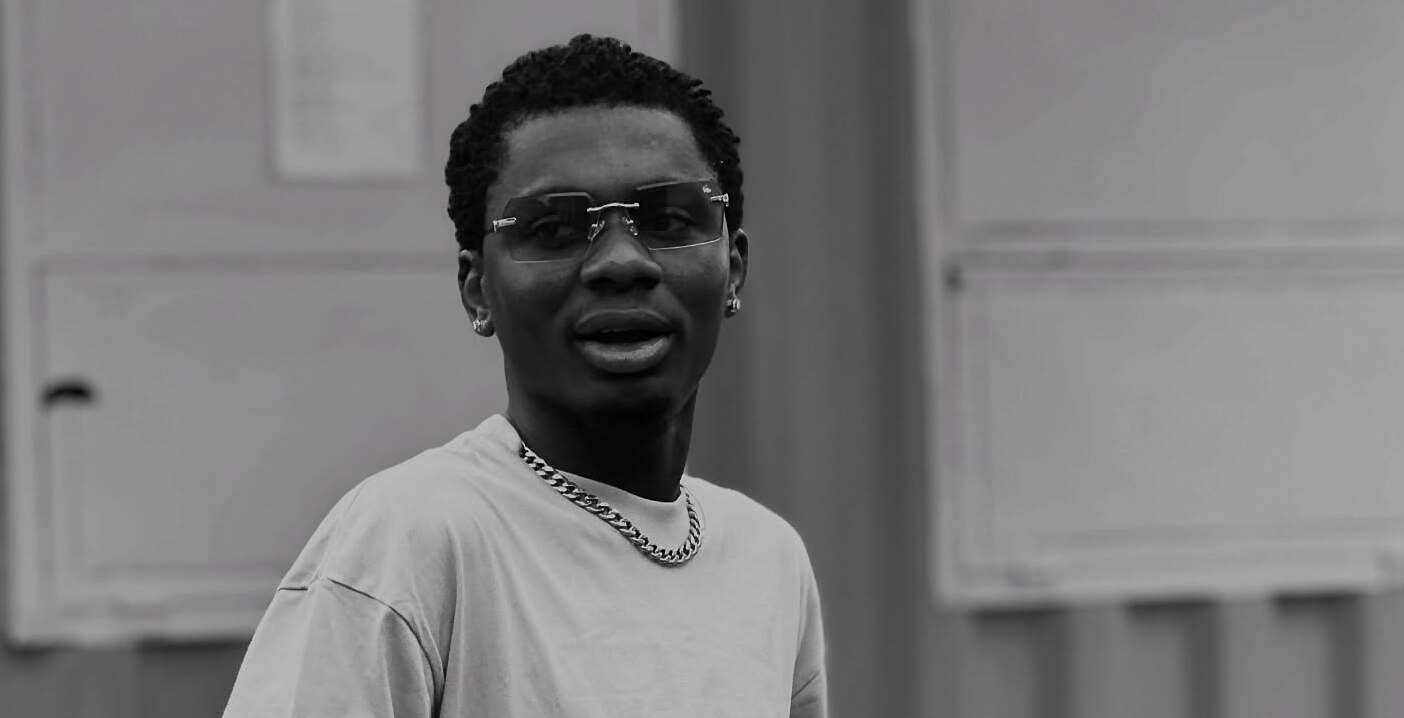
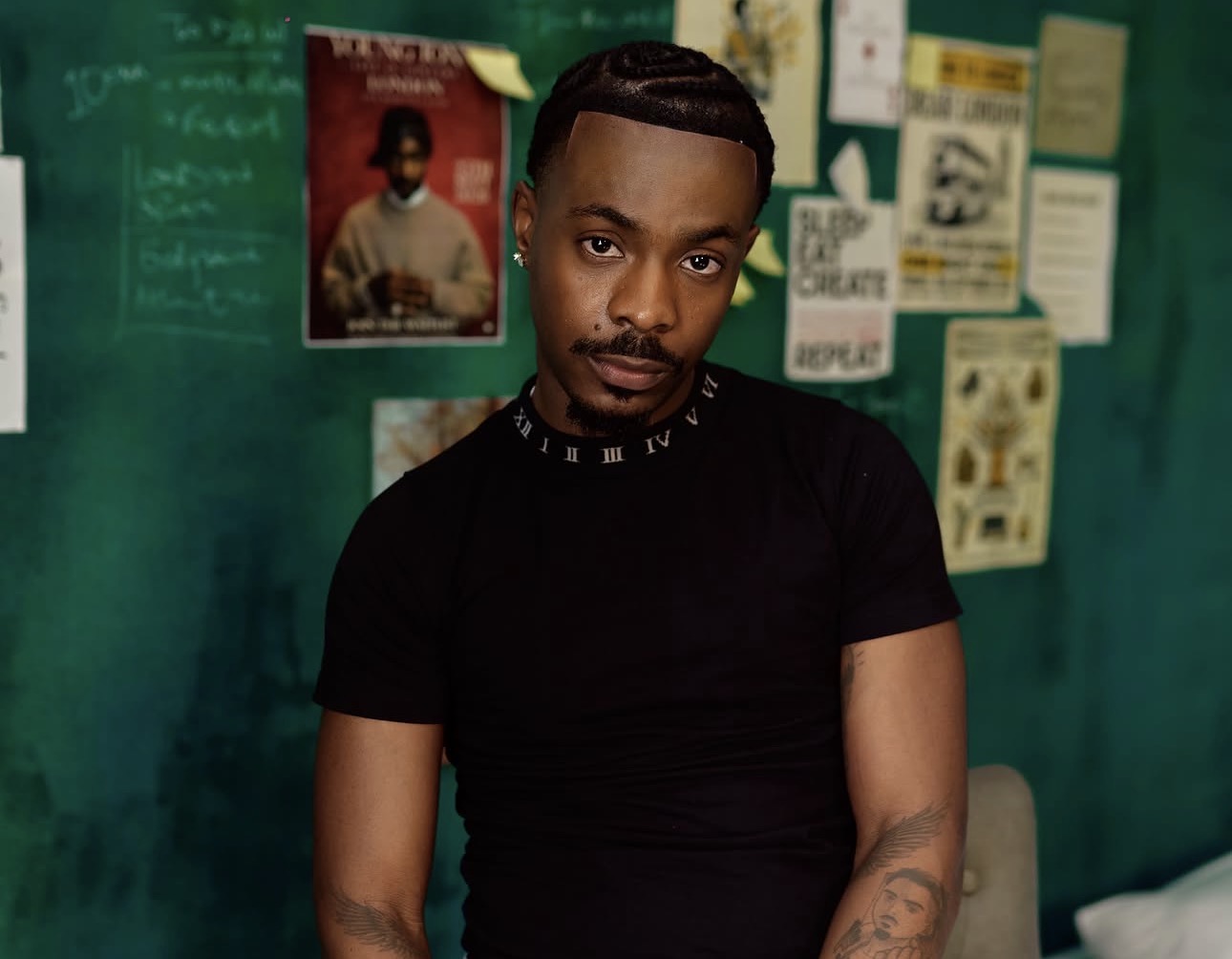
From a Lagos campus blog to a Sony deal that reached the Billboard charts, Sodiq Olamide "Maybreed" Tonade built one of Afrobeats' most influential management operations by refusing to act like a boss.
The phone call that would come to define Maybreed's career began as an accusation.
Bella Shmurda, then a hungry Lagos State University upstart, years before Vision 2020 made him the streets' favorite son, had heard that one of the songs Maybreed was distributing for him and making real money. Over $10,000, someone told him. So he called. Where was it?
Maybreed logged into the account. He was staring at a few hundred dollars. He told Bella the number, plainly. Bella didn't believe him. So Maybreed did the only thing that made sense to a young man with a finance degree and nothing to prove: he sent Bella the login and the password.
"I had nothing to hide," he says.
The money wasn't there yet. The trust was there. "That," he says, "is when our relationship got stronger."
That instinct, to open the books, hand over the keys, and let the artist see everything for themselves, is the quiet engine of one of the most influential careers in modern Nigerian music. You have heard the results even if you have never heard the name. Sodiq Olamide Tonade, known across the industry as Maybreed, is the cofounder of Dangbana Republik and the force behind Canny Consults, the operation now steering Bella Shmurda, Shoday and rising singer FOLA. In January 2026, Shoday and Fola's Paparazzi, released through Canny Consults, 5K Records and Sony Music UK, went to No. 1 on Nigeria's Official Top 100, climbed to No. 7 on Billboard's U.S. Afrobeats Songs chart and debuted at No. 12 in the U.K. For our executive of the month, it was simply the newest data point in a thesis he has been testing for more than a decade: patience, transparency and shared ownership beat control, every time.
From a campus blog to the big leagues
The story starts in 2015, in a university dorm, with a problem. "I had a couple of friends into music," Maybreed recalls, "and we kept asking ourselves, how does this go beyond our department, beyond our faculty?" His answer was a blog, named after the month of his birthday, which is where the "Maybreed" tag comes from. It grew into one of the biggest platforms on campus.
Lagos State University's music scene, as he describes it, was less a community than a turf war. "It was a battle: who's the best in this department, who's the best in that one," he says. Maybreed's project turned out to be almost accidentally diplomatic. "I just wanted to be friends with every creative. Put your song on my blog; let's publicise it. The competition became a collaboration. I bridged it."Get your record on his blog, and you suddenly discover the artists from other faculties who'd been your rivals the week before.
At first the blog paid him in the small change of Google AdSense and free passes to shows. Then he noticed something. "Once the blog got big enough, I started charging artists to post their songs," he says. "That was when I realized this could be a whole career."
The Kaywise education
His real apprenticeship came through DJ Kaywise. Maybreed was friends with the DJ's twin brother, and the connection turned a campus blogger into an industry insider almost overnight. He became Kaywise's personal assistant, "for everything," and found his opening on Soundcity FM.
"When he played his set, he couldn't play and tweet at the same time," Maybreed says. "So I'd tweet the songs. And I'd slip in the artists from my blog, because not everyone had that access." Tweet by tweet, he was building relationships with the artists, their managers, their PAs. "That," he says, "was my introduction to the music industry proper."
He is careful not to overstate the period. "I wasn't really in the business yet. I was a young boy, eager to meet people and learn." The business, the real one, would arrive with Bella.
Bella, and the 6,000 naira that started everything
They were introduced by a mutual contact at LASU. Maybreed, true to form, charged for his services and, true to a broke undergraduate, Bella didn't finish paying; he was owing 6,000 naira. "I didn't even take it seriously," Maybreed says. He liked the songs too much to care.
What he didn't have yet was distribution. Bella did the thing that would define their partnership: he asked a question Maybreed couldn't answer. "Bella is curious. He said, 'There are platforms like Apple Music, Spotify.' I didn't even know about them," Maybreed admits. "Because he said it, I went and researched, and I discovered I could upload the songs myself." He started using TuneCore, and Bella's records began traveling well beyond campus. "That opened another way to make money," he says. Soon every artist at LASU wanted the same service, for a fee.
The relationship became an engine that ran both ways. "Bella helped me grow my business," Maybreed says, "and I helped him grow his career." Bella brought ideas; Maybreed found ways to execute them, then sold those same solutions to everyone else. The fights, he freely admits, came too; the pair have argued their way through years of releases. But by then the foundation, that shared login, had already been poured.
Building Canny, and knowing when to let go
If Bella supplied the instinct, Maybreed's finance degree supplied the architecture. "I studied accounting and finance, and I read a lot about business," he says. "I don't like messy finances." As his blog, his distribution and his management work began to blur, he made a deliberate decision to pull them apart. "I needed to separate the blog from the management and distribution side, to know who is who, when to pay who, what's an expense and what's an asset." Canny Consults was the clean, separate entity that resulted.
Distribution turned out to be an education in marketing. Canny handled the rollout on Bella breakouts including "Vision 2020," the "High Tension" EP and "Cash App." "That was my introduction to marketing proper," Maybreed says. "Back then we didn't know about pitching DSPs for editorials. It was just us, put the song on every blog we could, get the link out, shoot content, sponsor posts to reach more people. And it got those songs everywhere."
Then, at the height of Canny's distribution business, he walked away from it. "Canny isn't a distribution company anymore. We stopped that a long while ago," he says. "Now we focus on artist management and development, how to get an artist to the next level. We leave the distribution to the professionals." The blogger who had taught himself to upload to Spotify had decided the real value was upstream.
Shoday, Fola and the Sony deal
The pivot to management brought Shoday. Maybreed was already a fan; the singer's breakout, "Caution," was everywhere in 2022, built one daily TikTok at a time. "I kept asking, who's this voice?" he says. A friend made the introduction; Shoday was unhappy with his management at the time. What sealed it wasn't the hit but the work ethic. "I don't work with lazy people. My whole introduction to this business, through Bella, was built on hard work," Maybreed says. "When I met Shoday and saw how hard he works, I was in."
That partnership produced one of the more instructive deals in the modern Nigerian playbook: Shoday's arrangement with 5K Records, a Sony Music UK subsidiary. Maybreed is adamant that it is not a traditional record contract. "It's not the regular label thing. I do joint ventures, licensing," he explains. The questions he asks across the table are always the same. "How many masters am I giving you? What will you do for the artist in return? And how long before those masters revert to us?" Ownership is the line he won't cross. "Owning masters is everything to me."
He speaks about the Sony chapter as a completed transaction, not a marriage. "Our deal with 5K and Sony has run its course. We met our forecast, it ended on a good note," he says. "I'd sign again if the terms are right." By early 2026, "Paparazzi," a Shoday and Fola collaboration off Shoday's album HYBRID, would validate the structure on a global scale.
He is equally quick to correct a misconception about Fola. "Fola is signed to Dangbana Republik, not to me personally," he says. Dangbana Republik, the label he founded with Bella, an attorney and a producer, is a collective, and its majority owner, he notes, is Bella's mother. "Fola was a friend of the Republic for years before we signed him. He practically lived in the studio with Bella. People think I own him. I don't. My job is to support the artist's growth."
The gospel of TikTok, and the Alaba DJ
Ask Maybreed for a marketing philosophy and the first word is evolve. "You have to evolve, or you'll be frustrated," he says. "There was a time it was Triller. Now it's TikTok." He prioritizes it, then immediately widens the aperture. "Everybody's on TikTok, so I use every platform." That includes the ones the algorithm crowd forgets. "I still service radio and TV. The drivers, the keke guys, they're always listening. And I'm a big fan of the Alaba DJs, the core street DJs. That was my foundation." Kaywise, he points out, was an Alaba DJ before he was a radio star.
He runs "massive ads," but insists the artist has to do their share. "Nobody preaches you better than you." The closest thing he has to a hack is not a hack at all. "Build a community around your fans first. Then collaborate, tap into other creators' communities, and the algorithm pushes it out. But the music has to be good first."
And spare him the expensive music video. "I once did a visualizer for a very cheap price," he says, "and it beat the numbers on the official video I'd shot. I made more money on the visualizer."
No bosses
For all the talk of charts and masters, the thing Maybreed most wants young executives to hear is closer to a code of conduct. The biggest lesson of managing three of the country's biggest acts, he says, is patience. "They're human. They have hearts and minds of their own." The second is transparency, the same instinct that once sent a login and password across a phone. "Nobody is 'putting anybody on,'" he says, pushing back on the old guard posture. "Everybody is platforming everybody. Be partners, not their boss."
He has watched what the alternative does. "I've seen too many artists living their manager's dream," he says. "Let the artist have their own. Tell them how you think it should be done, show them the results, but don't force it. The moment you force things without explaining, you become the thing you didn't want to be."
Which brings him back to the phone call, and to the only advice he trusts because it is the only thing he can prove. "I can only tell you what worked for me," he says. "Believe in your friend. Find someone you can believe in, and who believes in you. If Bella hadn't believed in what I could do, I wouldn't have pushed to learn all of this." He offers no formula, because he doesn't have one. "There's no single answer. Find that person, and you'll figure it out together."
More than a decade after a 6,000 naira debt he never bothered to collect, the figuring is going fine.